
Cannabis Seeds: A Buyer’s Guide for Home Growers

Treat Bud’s seed catalog like a shelf you can browse slowly. Start with the kind of seed that fits your goal, then compare pack size, lineage notes, price, availability, and caveats. Let the strain name draw you in, but let the product details make the decision.
Think of this guide as a slow pass through Bud’s seed shelf: what to notice first, which claims deserve a second look, and how to use product pages without turning seed shopping into a research project.
The quick seed-buying checklist
Before you buy cannabis seeds online, make the page answer these questions:
| Check | What you want to see |
|---|---|
| Seed type | Feminized, autoflower, regular, triploid, or another clearly explained format |
| Pack size | How many seeds are included and whether options vary |
| Genetics cues | Lineage, strain family, plant type, garden type, flavor, or effect notes when useful |
| Product fit | Seed type, pack size, and any garden-use or skill-level cue |
| Current terms | Price, sale status, stock status, pack size, and checkout path |
| Product caveats | Plain limits around seeds, germination, guarantees, and buyer responsibility rather than blanket promises |
| Claims to verify | Germination, viability, THC-status, testing, or guarantee language |
That is the whole game. A beautiful strain name is nice. A clear buying reason is better.

Why cannabis seeds need a better buying guide
Buying seeds should feel simple. In practice, it can get oddly foggy. A strain name sounds familiar, a pack photo looks clean, a sale tag catches your eye, and suddenly you are trying to decode breeder language, seed type, fulfillment claims, product fine print, and miracle-grow energy while your coffee gets cold.
Most seed-bank pages sound confident. Fast shipping. Free seeds. Germination guarantees. Huge menus. Beginner-friendly everything. Some of that may be useful. Some of it may be marketing confetti. The trick is knowing what should actually change your decision.
That is where Bud earns its role. Bud has been around cannabis commerce long enough to know that clarity matters more than swagger. The Bud story runs from California cannabis delivery into hemp-by-mail commerce, and this seed guide follows the same basic idea: make the path easier to understand before anyone checks out.
Start with seed type
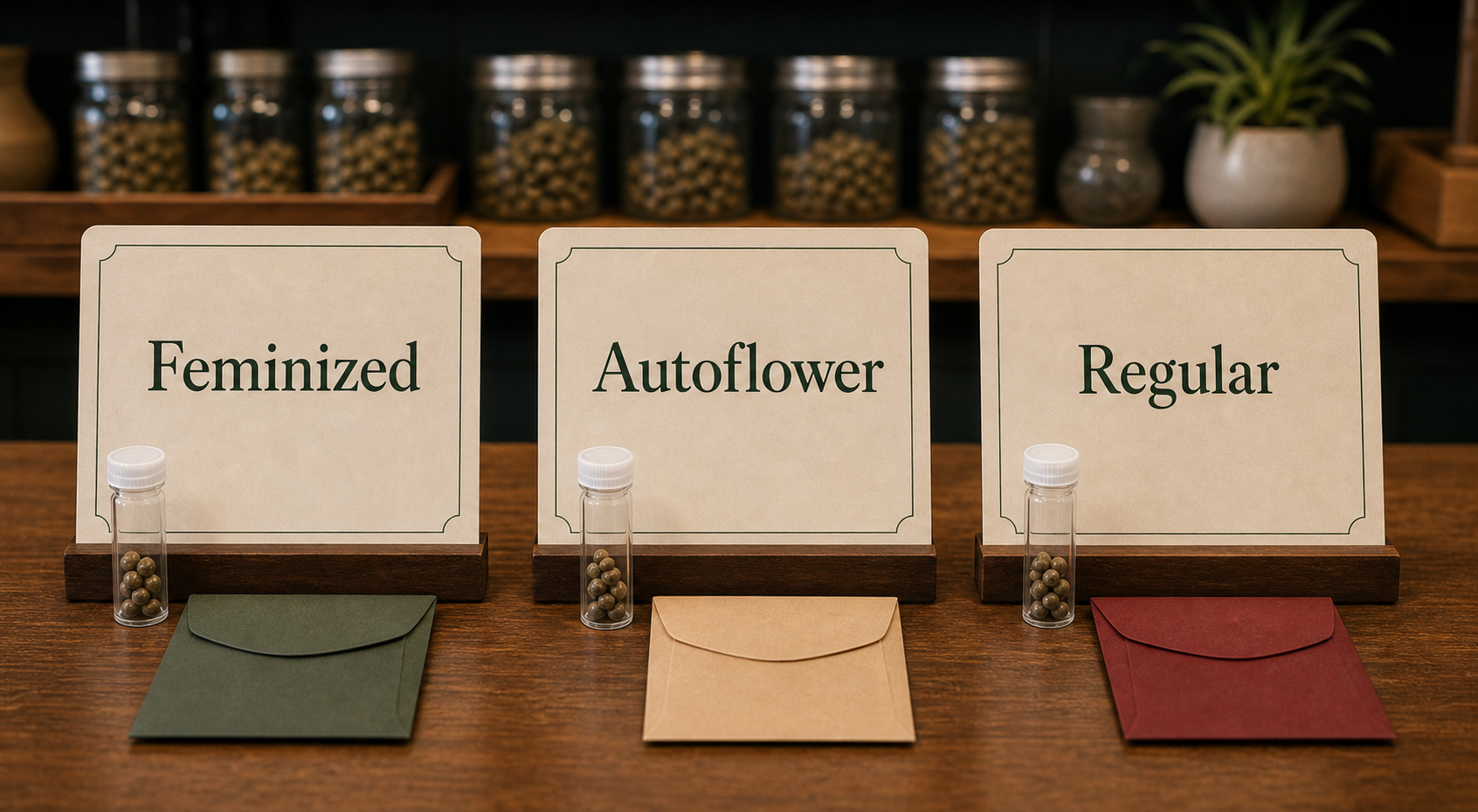
Most cannabis seed shopping starts with a few buckets: feminized, autoflower, and regular. You may also see newer specialty terms such as triploid. Skip the plant biology textbook; focus on what each seed type is trying to solve.
| Seed type | Plain-English idea | Best fit |
|---|---|---|
| Feminized | Bred to strongly favor female plants | People who want less sex-sorting and a simpler seed choice |
| Autoflower | Bred around a flowering pattern independent of the same light-cycle trigger as photoperiod seeds | People comparing simpler timing and compact planning |
| Regular | Classic seeds that can produce male or female plants | Genetics collectors, breeders, and people who want old-school selection |
| Triploid | Bred for plants with three sets of chromosomes | Buyers comparing advanced genetics claims around reduced viable seed production |
Feminized seeds
Feminized cannabis seeds are bred to strongly favor female plants. That matters because female cannabis plants are the ones people usually mean when they talk about flower production.
If a casual home grower ends up with a male plant instead, the outcome can be frustrating. Male plants can release pollen, and pollen can cause nearby female plants to produce seeds instead of focusing on the seedless flower most casual growers expected. That is why buyers outside a breeding project usually want fewer surprises about plant sex.
For many first-time seed buyers, feminized seeds are the easiest category to understand. The appeal is less sorting and a more predictable path from seed pack to plant selection.
On Bud, current examples include listings such as High Society Feminized Seeds and Grapes N Cream Feminized Seeds. Use those live product pages for the current pack count, pricing, lineage notes, and availability.
Autoflower seeds
Autoflower seeds come from genetics that are bred to flower without depending on the same light-cycle switch as traditional photoperiod plants. In plain English: autoflowers are popular with people who want a simpler timing story and a more compact decision path.
Autoflower still leaves plenty to evaluate. The seed type is built around a different flowering trigger, while strain, pack size, and grow-style notes still matter.
Bud's current seed shelf includes autoflower examples such as Acapulco Gold Feminized Autoflower Seeds, Gorilla Cookies Feminized Autoflower Seeds, Tahoe OG Feminized Autoflower Seeds, and Polar Bearz. Again, treat the live product page as the current source for details.
Regular seeds
Regular seeds are the classic lane. They can produce male or female plants, which makes them less convenient for someone who only wants flower, but more interesting for people who care about selection, seed-making, or old-school genetics.
Regular seeds can be great for experienced growers and genetics collectors. Early seed buyers should expect more selection work and more decisions.
Bud's current regular seed examples include listings such as West Coast Golden Haze, Piff Raider F2, and Marine Layer.
Triploid seeds
Triploid cannabis seeds are bred for plants with three sets of chromosomes instead of the usual two. In seed catalogs, breeders may use triploid genetics to reduce viable seed production if plants are exposed to pollen.
Treat triploid as an advanced genetics claim. It can be interesting when the breeder documents it clearly, but it is worth reading the product page closely before buying.
Look past the strain name
Cannabis people love a name. Acapulco Gold, Tahoe OG, Gorilla Cookies, Haze, Gelato, Biscotti – a good name can carry a whole little movie in your head.
Names help, but the plant is bigger than the name. Cannabis strain names have a long history of loose use across growers, sellers, and product lines. One peer-reviewed genetics paper on Cannabis sativa notes that strain names can be unreliable identifiers in a market that grew for years without a consistent verification system. Translation: the name is a clue rather than a lab report.
Use strain names as the front door. Then read the room:
- Is this feminized, autoflower, or regular?
- Is the lineage clear?
- Is the pack size obvious?
- Does the strain or lineage note make sense?
- Are price, availability, and checkout clear?
- Are the important caveats easy to find?
That is the difference between buying a name and buying a product.
Be careful with guarantees
Competitor seed banks love guarantee language. Germination guarantees. Free shipping thresholds. Free seed promos. "Beginner-friendly" badges everywhere. Some of those offers may be real, but the fine print matters.
Before you treat a guarantee as a reason to buy, check:
- What exactly is guaranteed?
- Does the seller require photos, time windows, account registration, or specific steps?
- Does the policy apply to your order?
- Is the seller promising a refund, replacement, store credit, or only support?
- Does the seller make an unconfirmed claim?
A clear limit is part of trust. A loud promise that disappears later is a buying risk.
Beginner-friendly can still be interesting
For a first seed order, most people should bias toward clarity. That often means feminized or autoflower seeds from a product page that explains the basics plainly.
The beginner trap is chasing the most dramatic description on the internet. Huge yield claims, wild potency language, and "easy for everyone" promises can sound exciting, but clear buying details matter more. A better first pick is usually the seed you can explain back to yourself:
"This is a feminized autoflower pack. It has this many seeds. The price is clear. The strain notes make sense. Checkout is straightforward. I know why I picked it."
That sentence is boring in the useful way. It helps you avoid buying a mystery in a zip bag.
How Bud fits into the seed decision
Bud's seed shelf works like a curated counter instead of a maze. The category page gives you the live shelf, and the product pages carry the purchase details that should decide the order.
Use Bud's cannabis seeds category to compare the live shelf by seed type and strain family. Open the individual product pages when you need current price, stock, sale labels, pack sizes, lineage notes, and checkout details. Product pages move with inventory; an older article should teach the buying process rather than freeze the shelf in place.
That is especially important in seed commerce. Bud can give buyers a clear path while still letting inventory, price, and pack details move as the shelf changes.
A simple way to choose
If you are new to buying seeds, use this order:
- Choose the goal: simple first pack, fast autoflower run, classic strain family, collector genetics, or regular seed selection.
- Choose the seed type: feminized, autoflower, regular, triploid, or another clearly explained format.
- Compare pack size, price, current availability, checkout details, and strain notes.
- Slow down on any claim that sounds bigger than the details support.
- Pick the product that gives you the clearest reasons rather than the loudest name.
That process makes the decision cleaner, even when the choice is imperfect.
Shop cannabis seeds on Bud
When you are ready to compare current listings, start with the live category page:
Start with the seed type, then compare live examples: feminized listings such as High Society and Grapes N Cream, autoflower listings such as Acapulco Gold and Gorilla Cookies, and regular seed listings such as West Coast Golden Haze, Piff Raider F2, and Marine Layer. The right seed pack should make sense before it sounds cool.
FAQ about buying cannabis seeds
What is the difference between feminized and autoflower seeds?
Feminized seeds are bred to strongly favor female plants. Autoflower seeds are bred around a flowering pattern independent of the same light-cycle trigger as traditional photoperiod plants. Some seeds are both feminized and autoflowering, so read the product page carefully.
Are regular cannabis seeds bad for beginners?
They are simply more involved. Regular seeds can produce male or female plants, so they ask for more selection and attention. Beginners who want a simpler first purchase often start with feminized or autoflower seeds.
What are triploid cannabis seeds?
Triploid cannabis seeds are bred for plants with three sets of chromosomes instead of the usual two. In seed catalogs, breeders may present triploid genetics as a way to reduce viable seed production if plants are exposed to pollen. Treat triploid as an advanced claim that should be backed by clear breeder or product details.
Can you buy cannabis seeds online?
Yes, cannabis seeds are sold online by seed banks, breeders, and retailers, including Bud. Whether a specific product is available to you depends on the seller's current policies, checkout flow, and availability where you live.
What should I look for in a cannabis seed seller?
Look for clear listings, real checkout, visible price and stock status, seed type, pack size, useful strain details, and conservative product language.
Should I start with autoflower or feminized seeds?
Many first-time buyers start with feminized seeds, autoflower seeds, or seeds that are both. The better choice depends on your goal. If you want a simpler seed-type decision, avoid starting with a vague listing that leaves the seed type unclear.
Where can I shop cannabis seeds on Bud?
You can browse current seed listings at bud.com/category/seeds/. Use the live category and product pages for current prices, pack sizes, stock, and checkout details.
About the author
Written by Milo Vega, a long-time cannabis and hemp consumer who has managed to grow and smoke a few of his own plants in his time.